Tuesday, January 29, 2008

Sunday, January 27, 2008
Audio Engineering Discussion
Audio engineering is a branch of electrical engineering that seeks to connect the world of music with the technology used to capture and reproduce it. Graduates of such a degree are trained to be knowledgeable, and therefore valuable industry professionals. Combining theoretical knowledge with real-world skills, audio engineers bridge the gap between professional musician and those who design their equipment. They are especially well-versed in all technical aspects of music production, from recording and digital audio to acoustics.
Peter Siegmann, fellow classmate and aspiring audio engineer, recognizes the benefits of thoroughly understanding multiple aspects of music production. Because of this appreciation for what he will learn as an audio engineer, Peter decided to first work toward this degree, before pursuing his true passion for music engineering. Music engineering is much more focused on the musical aspect of production than audio engineering, but still study the software and hardware design of audio components in detail.
As a professional, Peter hopes to work in a studio, possibly for SONY, a current media giant. SONY, along with the entire music industry is constantly growing and adapting as the public’s taste in music continuous to change. Also, thanks to audio engineers such as Peter, the technology used in the music industry is being continuously advanced.
For instance, headphone technology has made significant leaps in recent years. One of the most widely discussed advances is the ability to proactively cancel out background noise. BOSE has the leader in marketing such headphones, but many other companies have released their own models, some of which are much higher quality and more effective. There are also studio quality headphones that only produce sound when the headphones are actively being worn, so that when they are taken off in a studio, the acoustically controlled environment is not polluted with background noise.
Headphones have also been made increasingly small in size. Specifically for portable music players and hand held video games, ear bud headphones are commonplace. They have head phones that fit inside the ear canal exactly like foam ear plugs. To insert them, the wearer twists the ear phone to make compact the foam, and then inserts the device in the ear. The foam then expands and completely fills the ear canal, thereby completely blocking all excess sound. This is all closely related to hearing aid technology as well, which is another industry taking advantage of the skills offered by audio engineers.
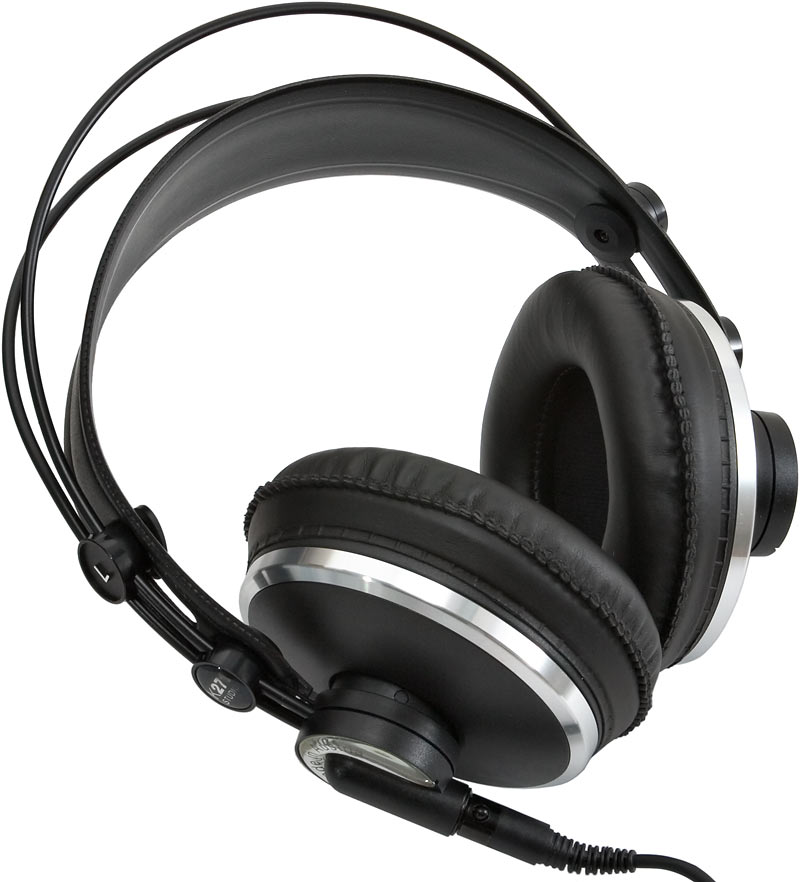
However, headphone technology is only one of many recent developments in the industry. The IPOD, for instance, has completely taken over its field, and changed the way most people think about portable music. The days of compacts discs are soon days of the past. When CDs first became popular, that too was the result of the work of audio engineers such as Peter. With the demand always growing and music lovers needs always changing, new and improved technology is still sure to be seen constantly in the future.
As previously mentioned, Peter is pursuing audio engineering to develop a thorough knowledge of all aspects of the studio happenings, but his real passion is for the creative side of sound mixing and actually working with the sound equipment in the studios. Unsure of exactly how he will get there, Peter is confident that his current path with help him develop the skills necessary to reach his goals.
Peter Siegmann, fellow classmate and aspiring audio engineer, recognizes the benefits of thoroughly understanding multiple aspects of music production. Because of this appreciation for what he will learn as an audio engineer, Peter decided to first work toward this degree, before pursuing his true passion for music engineering. Music engineering is much more focused on the musical aspect of production than audio engineering, but still study the software and hardware design of audio components in detail.
As a professional, Peter hopes to work in a studio, possibly for SONY, a current media giant. SONY, along with the entire music industry is constantly growing and adapting as the public’s taste in music continuous to change. Also, thanks to audio engineers such as Peter, the technology used in the music industry is being continuously advanced.
For instance, headphone technology has made significant leaps in recent years. One of the most widely discussed advances is the ability to proactively cancel out background noise. BOSE has the leader in marketing such headphones, but many other companies have released their own models, some of which are much higher quality and more effective. There are also studio quality headphones that only produce sound when the headphones are actively being worn, so that when they are taken off in a studio, the acoustically controlled environment is not polluted with background noise.
Headphones have also been made increasingly small in size. Specifically for portable music players and hand held video games, ear bud headphones are commonplace. They have head phones that fit inside the ear canal exactly like foam ear plugs. To insert them, the wearer twists the ear phone to make compact the foam, and then inserts the device in the ear. The foam then expands and completely fills the ear canal, thereby completely blocking all excess sound. This is all closely related to hearing aid technology as well, which is another industry taking advantage of the skills offered by audio engineers.
However, headphone technology is only one of many recent developments in the industry. The IPOD, for instance, has completely taken over its field, and changed the way most people think about portable music. The days of compacts discs are soon days of the past. When CDs first became popular, that too was the result of the work of audio engineers such as Peter. With the demand always growing and music lovers needs always changing, new and improved technology is still sure to be seen constantly in the future.
As previously mentioned, Peter is pursuing audio engineering to develop a thorough knowledge of all aspects of the studio happenings, but his real passion is for the creative side of sound mixing and actually working with the sound equipment in the studios. Unsure of exactly how he will get there, Peter is confident that his current path with help him develop the skills necessary to reach his goals.
Wednesday, January 23, 2008
Subscribe to:
Posts (Atom)